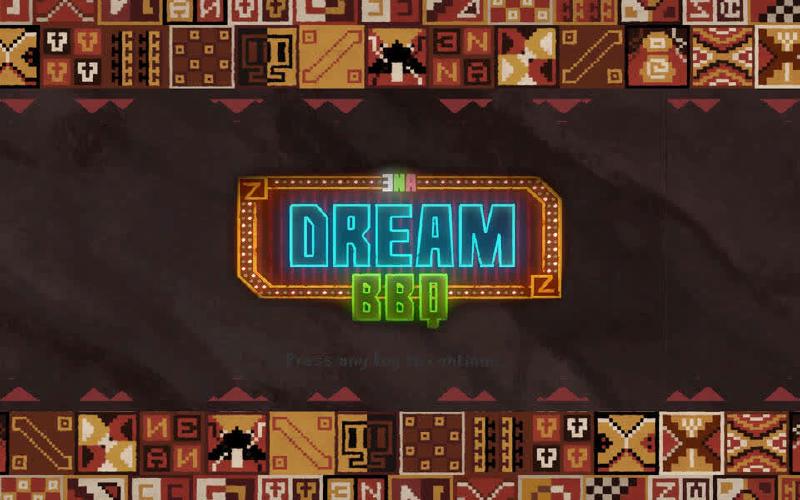
This article is an entry for the January 2026 edition of BlogBlog Club Party, with the theme being ‘recommendations.’
Introduction
Just in case you, dear reader, are wondering why that capital E was written like that: yes, it’s on purpose. Nonetheless, the symbol ∃ and the normal capital E will be used interchangeably throughout this article.
This article is an introduction of ∃NA, which is a… well, I wouldn’t call it a ‘franchise’, instead it’s more like an online series. It also places the focus on the latest instalment of the series: a first-person adventure video game called ENA: Dream BBQ.
About the ∃NA series
First released online in 2020, ∃NA is an online work created by a team that is led by Joel Guerra, a Peruvian artist and animator, and is initially presented in the form of animated videos. It is renowned for its unique combination of webcore and weirdcore aesthestics, featuring the artistic style of computer operating systems and the Internet during the 1980s to the 1990s, added with a weird, surrealistic touch. Unnerving, but simultaneously fascinating.
Another notable characteristic of the ∃NA series is its incorporation of diverse languages and multicultural elements. Besides the English language, ∃NA also features characters that speak Japanese, Korean, Latin American Spanish and Russian, as well as an abundance of alien-sounding fictional languages. Speaking of dialogue, the conversations between characters in ∃NA are seemingly nonsensical, but after putting some thought into them, some meanings can still be deduced (well, more and less — at least those that matter enough in properly understanding the main plot), and this makes me highly commend the writer’s imagination and writing skills. As for multicultural elements, both Western and Eastern examples including Turrón, Korean masks and stone lions can be found in the videos.
Currently1, the animated video series of ENA has released a total of four full episodes, with their stories being independent of each other. The series’ namesake is its very main character, a humanoid entity (not a human!) that resembles a black-haired young woman, bearing a signature Picasso-style double-coloured face.
Each episode of the video series mainly revolves around ENA’s adventures as she explores the bizarre world she is in, and we, the audience, get to experience the wonders alongside her through her first-person perspective. We can also watch the playful interactions between ENA and her Moon-like friend, Moony.
The following is the most popular video of the ∃NA animated series, titled Temptation Stairway. It is also this video that introduced me to this series when it showed up in my YouTube recommended video playlist one day.
With that said, in the game ENA: Dream BBQ, which this article will discuss in greater lengths, the main character ENA is controlled by the player (us), and features a different appearance, colour scheme, costume choice and personality, basically an alternate-universe ENA.
Background of ENA: Dream BBQ
After almost four long years of developmental period (counting from the release date of the game teaser video), ENA: Dream BBQ finally received its first release on 27 March, 2025 in the Steam platform (it is currently also the only available platform). The game has cross-platform support of Windows, MacOS and — most importantly — Linux; even on my Pop!_OS laptop, the game still runs perfectly fine!
The overall aesthetics and worldbuilding of this indie game, and, by extension, the entire ENA series, draws heavy inspiration from the exploration-adventure video game LSD: Dream Emulator, which was first released by Asmik Ace Entertainment in Japan in 1998, and is known for its freeform gameplay (i.e. no rules whatsoever) and psychedelic art style. As an experimental work that treats video games as a medium for purely artistic appreciation, LSD: Dream Emulator was considered well ahead of its time, and can be said to be one of the predecessors of open-ended exploration games as a whole.
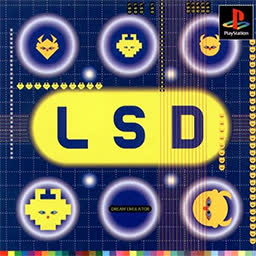
However, unlike the entirely aimless gameplay that allows players to explore the psychedelic world built in the game without restrictions as in LSD: Dream Emulator, ENA: Dream BBQ introduces a twist to such gameplay by incorporating mechanics such as a pre-determined story and elements of puzzle-solving as well as main and side quests that help in progressing the plot.
Gameplay Walkthrough
So far1, only the first chapter of the game (Lonely Door) has been released, and the subsequent chapters are still in the developmental stage. The first chapter is currently available for free, but the developers are planning to release the future chapters in the form of paid downloadable content (DLC). Thus, here, I will mainly only discuss the content of the first chapter, while minimising spoilers.
Once entering the game, the player is then directed to make some simple initial settings, before being brought into the very first part of the in-game world:
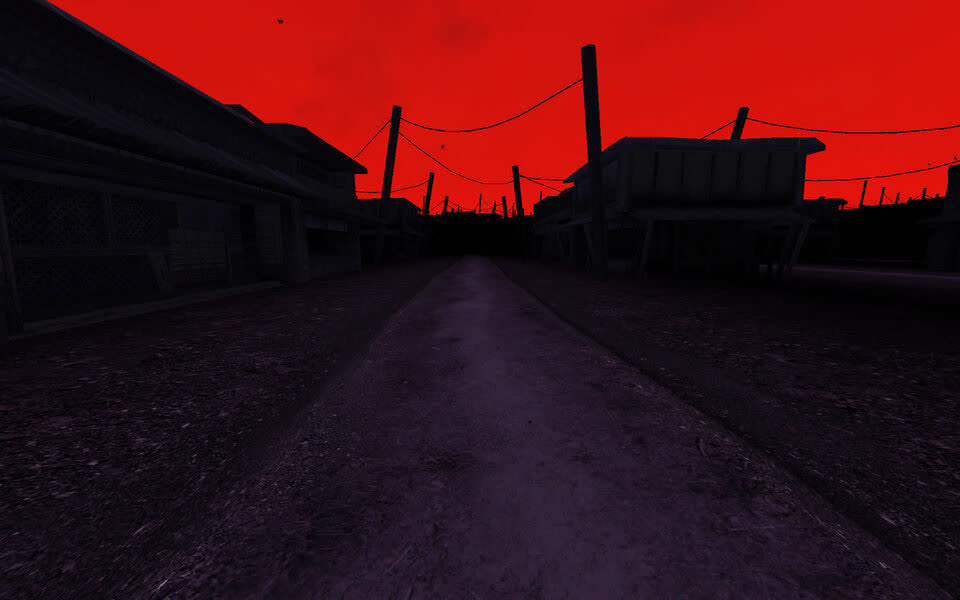
What’s next? That’s it. Yup, I’m not joking. The game really leaves no further explanations afterwards, basically telling the player, ‘Good luck, have fun exploring!’ What a bold gameplay design decision! Fortunately, thanks to the brilliantly crafted level design, (hopefully most, if not all) players will not get stuck there, and just quit in anger. Furthermore, this beautifully fits the philosophy of ‘freeform exploration’ as intended by the developers, which serves as a(n)2 homage to LSD: Dream Emulator, their source of inspiration.
The player explores the in-game world with the role of ENA, while discovering key objects in the process. After interacting with these objects, the player either gets transported to another area, or is able to collect them for the purpose of completing quests.
Although the main character ENA is controlled by the player, players actually do not have absolute agency (or free will, one may say) in the game, i.e. it’s not the player acting within ENA’s body. More accurately, the player is supposed to experience what ENA is facing throughout the gameplay via her first-person perspective, albeit the exact sequence of actions may vary. In other words, ultimately the player’s actions are subjected to ENA’s thoughts, if that makes sense.
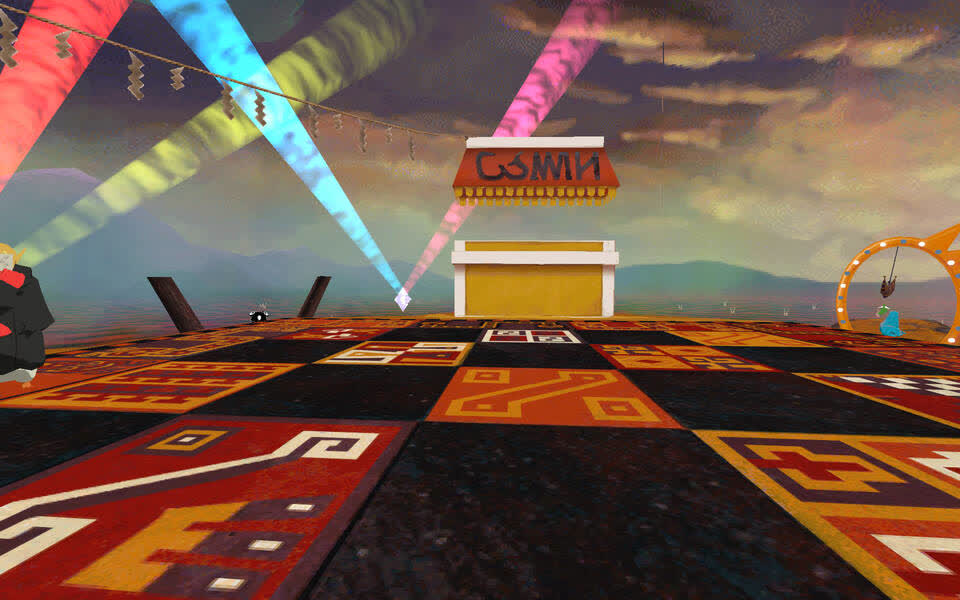
Besides, as ENA, players will encounter various non-player characters (NPCs), some of which don’t carry much narrative weight, while some others serve key roles in pushing the story forward and providing quests to players. Players can also experience the signature ridiculous dialogue, which contribute to the humour and fun of the game.
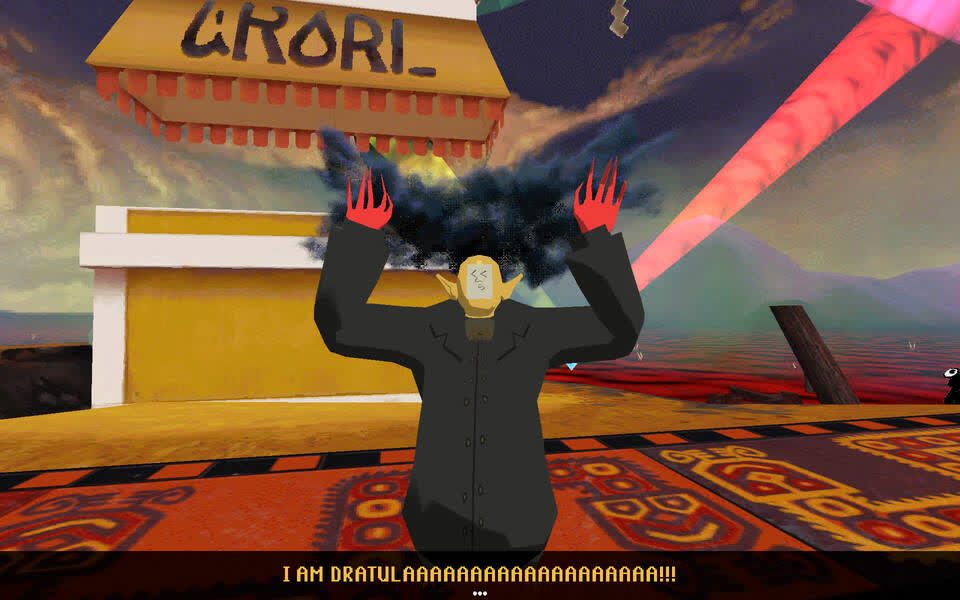
Just like that, players continue to explore this in-game world, where one could expect ‘anything’ to happen. As they interact with the NPCs and the objects scattered around it, they try to figure out how to progress the game based on the obtained clues.
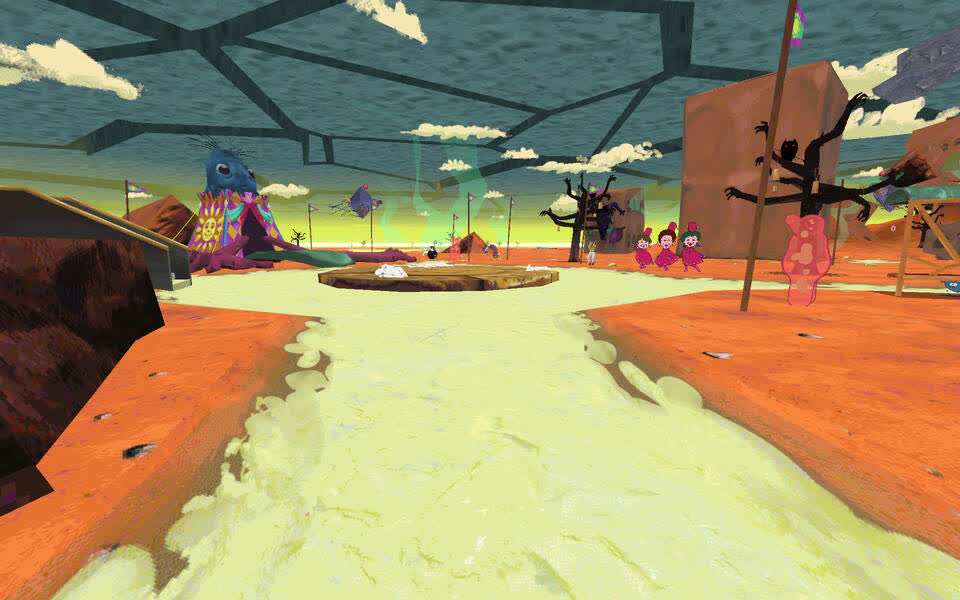
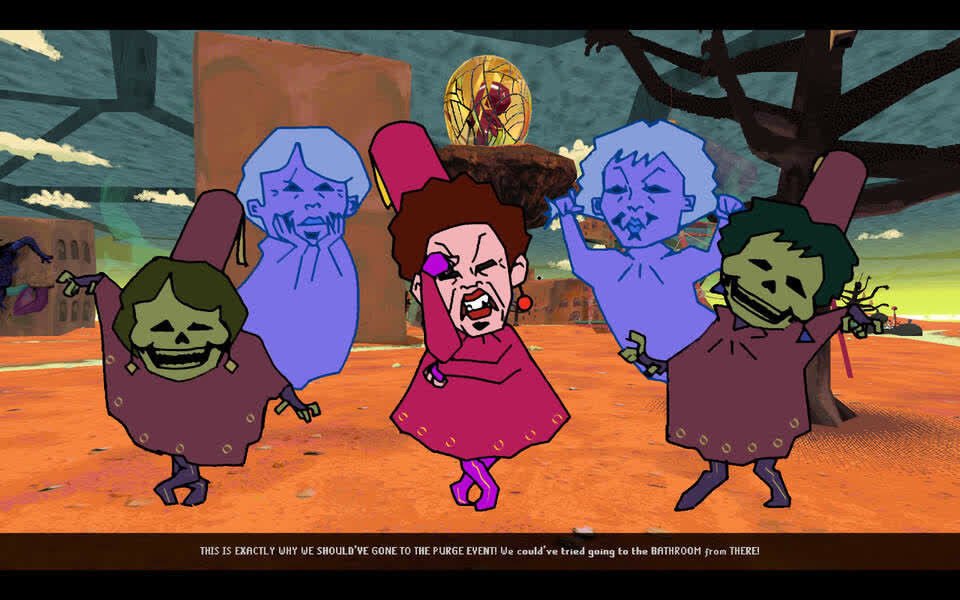
As someone who rarely plays video games, the overall difficulty of this game to me is pretty above average. Without relying on
Some spoilers: regarding the ending and the storyline…
Even though there is only one ending to the story, depending on how one plays the game, the plot can be developed in two different directions. The first one occurs after the player completes all main quests and then follows a certain NPC's instructions to go to the final area.The second one occurs when the player gets transported to an entirely different area by another certain NPC when clearing one of the main quests, and gets stuck there afterwards due to the way going back being blocked, causing the player unable to finish all the main quests. However, there’s actually still a way out that leads to the final area and complete the game.
Not only did I have to wander around the entire vast in-game world in order to obtain all the clues, I also had to keep the cogs in my mind moving to solve the puzzles. One of the important stages was so difficult that I had to keep retrying for quite a long while. Despite all the challenges though, I had a lot of fun immersing and enjoying myself in the fantastical world built in the game, so I cannot say that it was an unpleasant experience!
Conclusion
If the only thing you could say after finishing the game was, ‘What on actual earth was going on?’, then that’s great! It’s what the game intends to bring to the players, and part of its very charm 😆!
Although the overall gameplay experience is likely to give players more questions than answers, what matters is the process of exploration around the weird and mesmerising world, wandering around the in-game area, while admiring its artistic style. This is what the game wants the players to take away from, at least in my personal opinion.
The pace of the entire game is also quite balanced to me; I didn’t feel underwhelmed nor overwhelmed during any moment when playing it. Moreover, there are a lot of easter eggs, big or small, hidden throughout the game, waiting for players to discover, and I won’t be spoiling them here.
If I have to rate this game out of five stars, I may be biased towards it as a fan myself, but I certainly would give a full five-star rating! I highly recommend you all to give ENA: Dream BBQ a try, treating it as a gateway to experience the nostalgic yet still wonderfully strange worldbuilding as presented in the entire ∃NA series.
Sigh, I can’t wait for the release of the future chapters…
Further reading and resources:
- Video playlist of the ∃NA animated series
- Joel Guerra’s personal website (Even though this website mainly acts as a marketplace for merchandises, it’s still a fun site to explore; not only does it have an artistic style that evokes 1990s Windows nostalgia, as well as an audio player that features webcore music, one can even register an account to obtain his/her own ENA avatar and profile!)
- ENA: Dream BBQ Chapter 1 OST album (Also highly recommended! Fun fact: the main motif of an area BGM, The Hub, is actually referencing YMO’s classic, Simoon!)
- LSD: Dream Emulator gameplay video
- Webcore article on the Fandom wiki
- Weirdcore article on the Fandom wiki